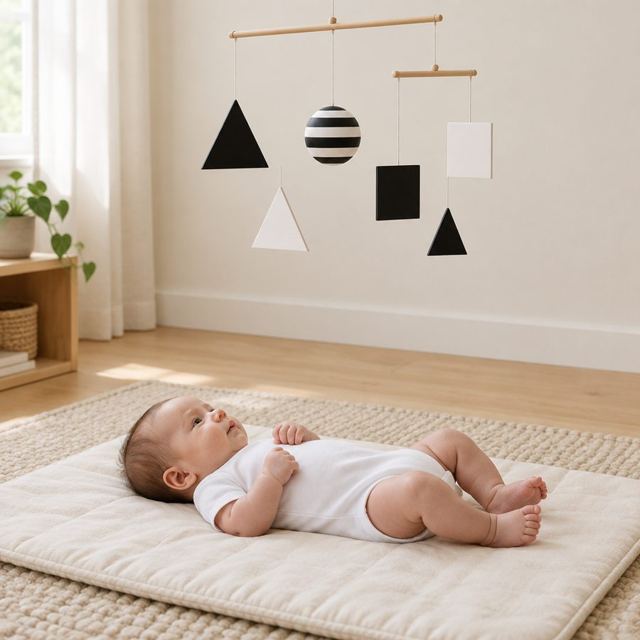
0 to 6 weeks
Munari mobile
Early visual focus
Hang 30 to 40 cm above baby during awake time on the mat. Remove when baby loses interest.
48 materials from the Montessori at Home guide. Each card shows what the material teaches, how to show it to your child, and a hand-picked option on Amazon. Start with your child's age and add one thing at a time.
Safety first. For children under 3, anything small enough to fit through a toilet-paper tube is a choking risk. Supervise all bead, transfer and small-object work.
Start small. Three to five materials is plenty. Many of these can be made at home from things you already have.
As an Amazon Associate, Miss Lucia Montessori earns from qualifying purchases. It costs you nothing extra and helps us keep making free lessons. Links open Amazon in a new tab.
In the first year, your baby is learning to see, reach, grasp and move. Simple things to look at and hold, and lots of free floor time, matter most.
Early visual focus
Hang 30 to 40 cm above baby during awake time on the mat. Remove when baby loses interest.
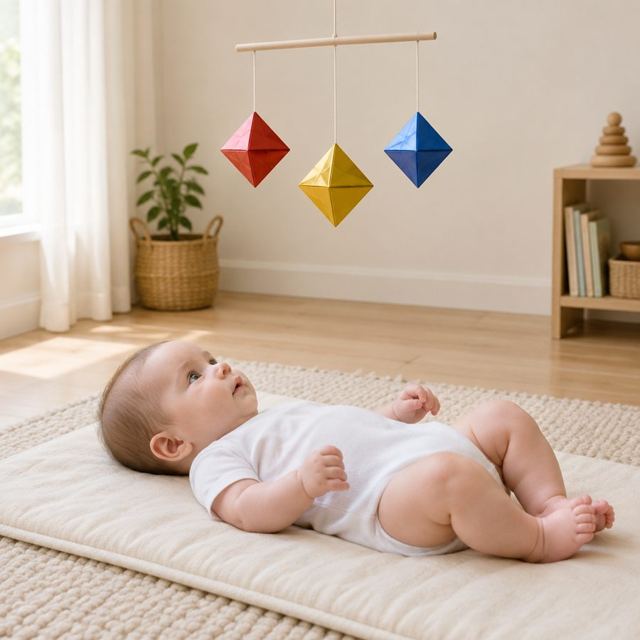
Color recognition
Hang it slightly to one side so baby turns their head to follow it.
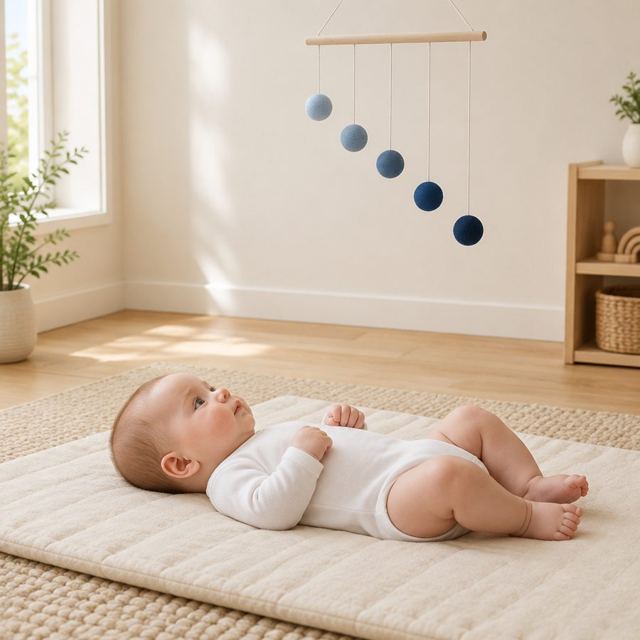
Seeing small differences
Let baby watch the spheres move in the air.
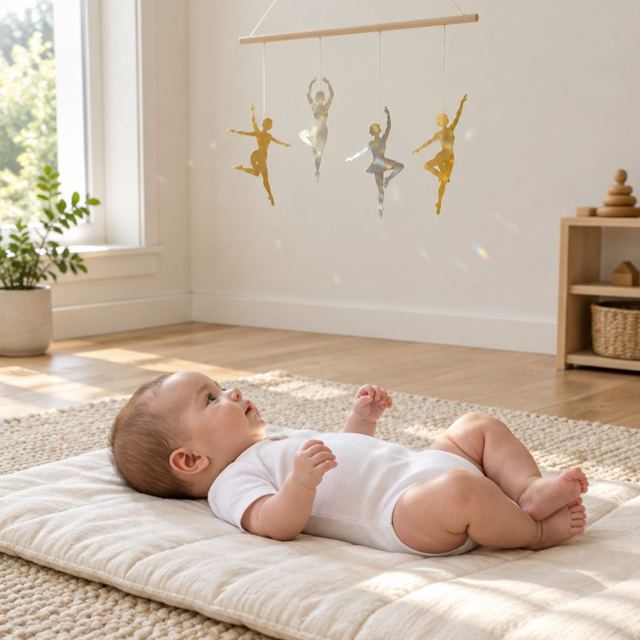
Tracking movement and light
Hang near a window so it moves gently.
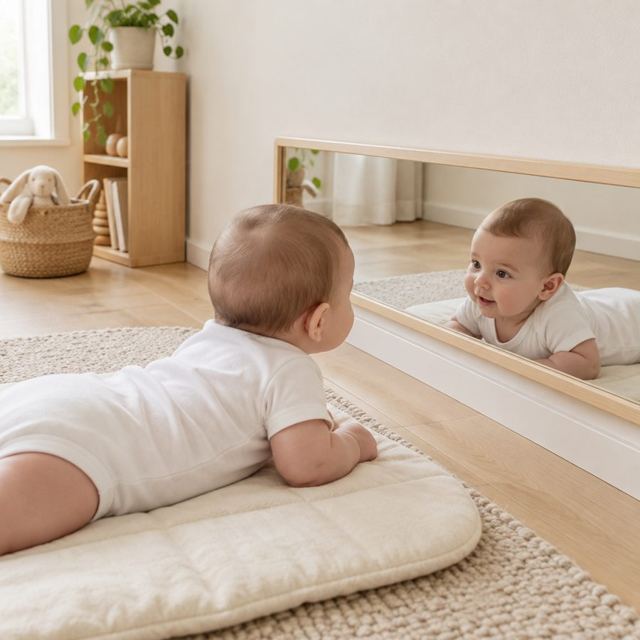
Body awareness, rolling, crawling
Daily floor time, belly and back. Baby watches their own movements in the mirror.
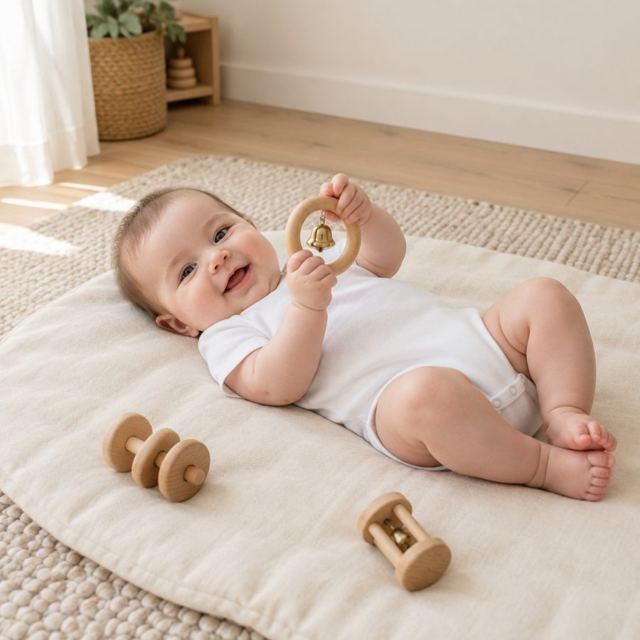
Grasping and letting go
Offer one at a time, within reach. Wooden ring, bell rattle, interlocking discs.
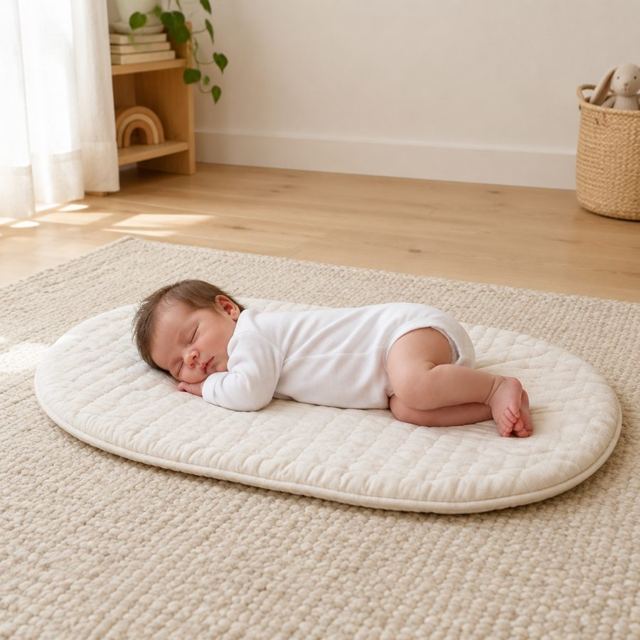
Security and consistency
A thin padded mat baby lies on while being held, so moving baby feels calm.
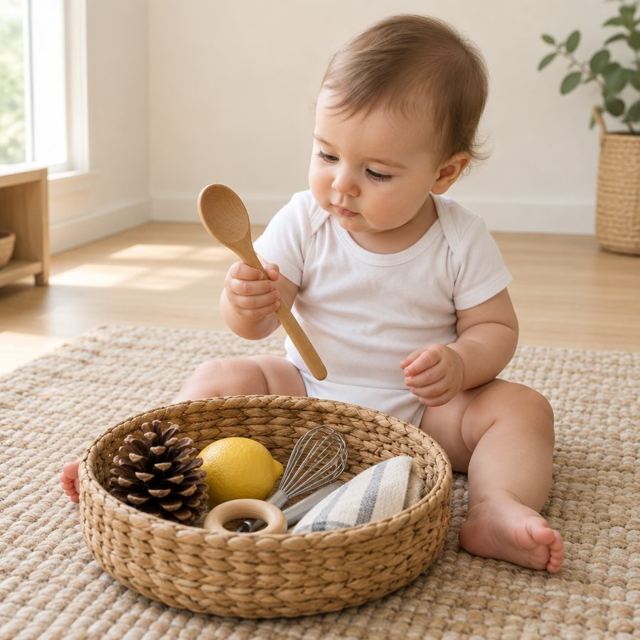
Exploring texture, weight, sound
Fill a low basket with 5 to 8 safe household objects. Rotate them weekly.
A homemade basket of kitchen objects works just as well.
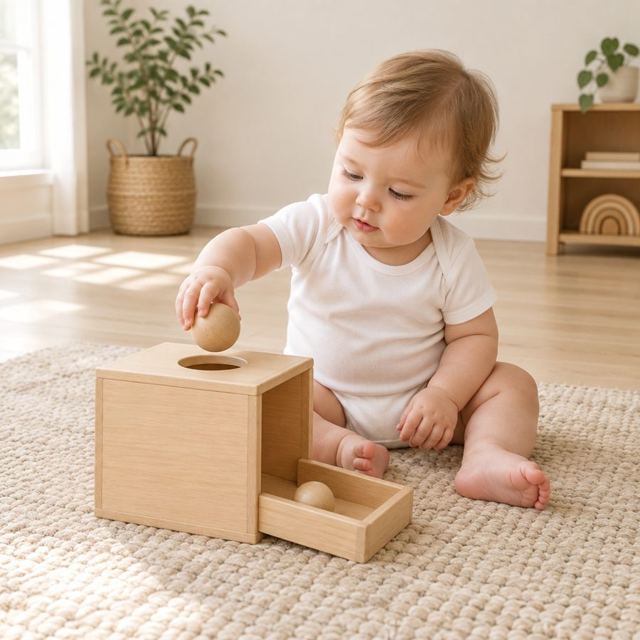
Objects still exist when hidden
Show baby once: drop the ball, watch it roll out. Then let them repeat.
Check the ball is too big to swallow.
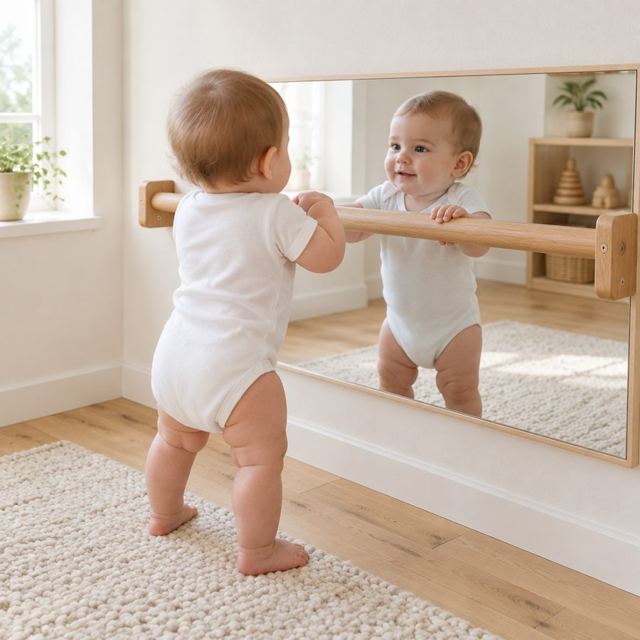
Standing and cruising
Mount it beside the mirror at baby's chest height.
Your toddler wants to walk, carry, fill and empty. Give them real work at their size and one clear goal at a time.
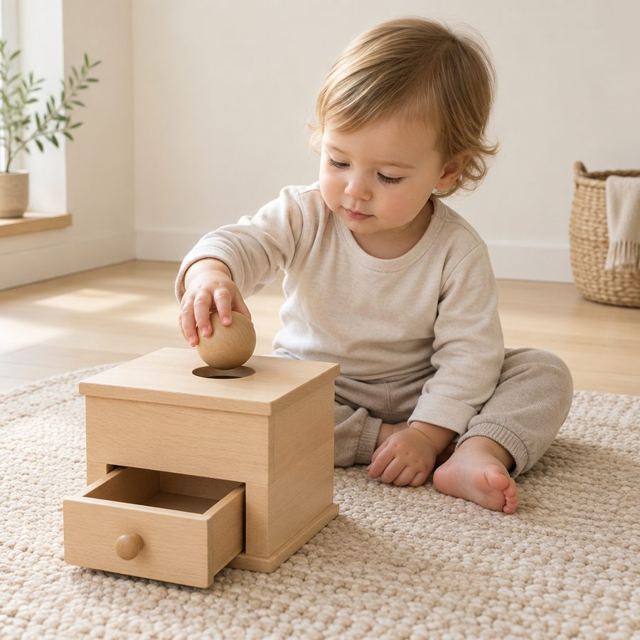
Hand-eye coordination
Start with a ball or peg. Add discs and cubes when the first is easy.
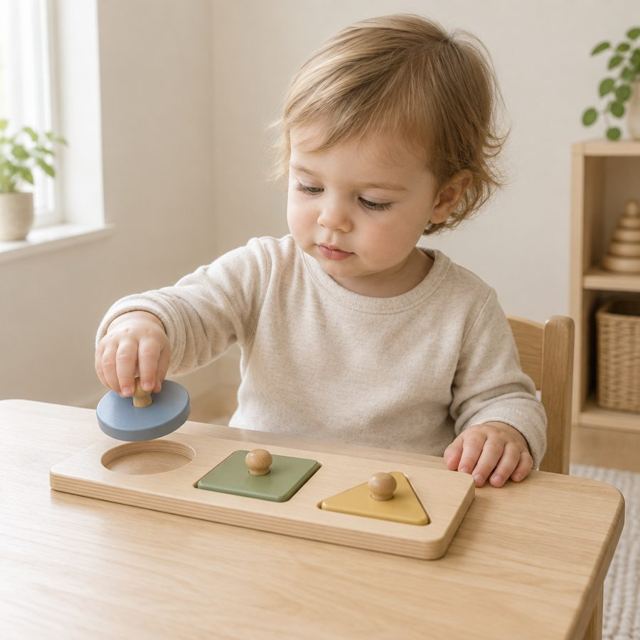
Pincer grip, matching shapes
Show how to lift by the knob slowly. Then let your child try.
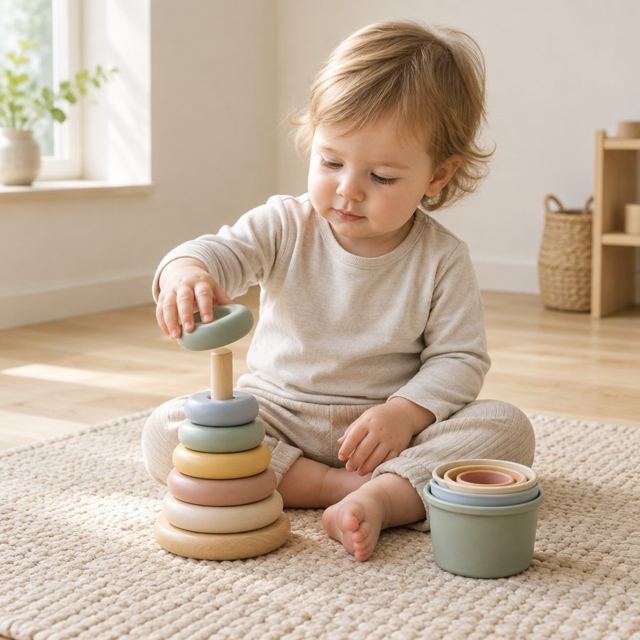
Size and order
Let your child discover the order. Mistakes teach too.
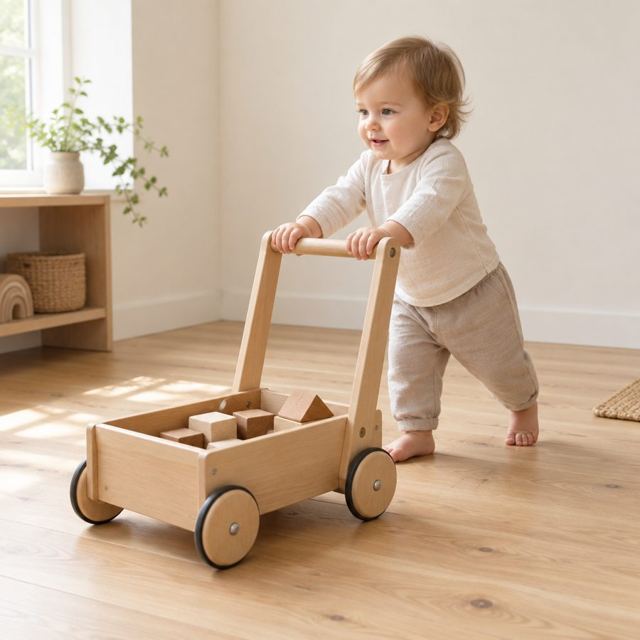
Confident walking
A heavy wooden cart that does not tip easily.
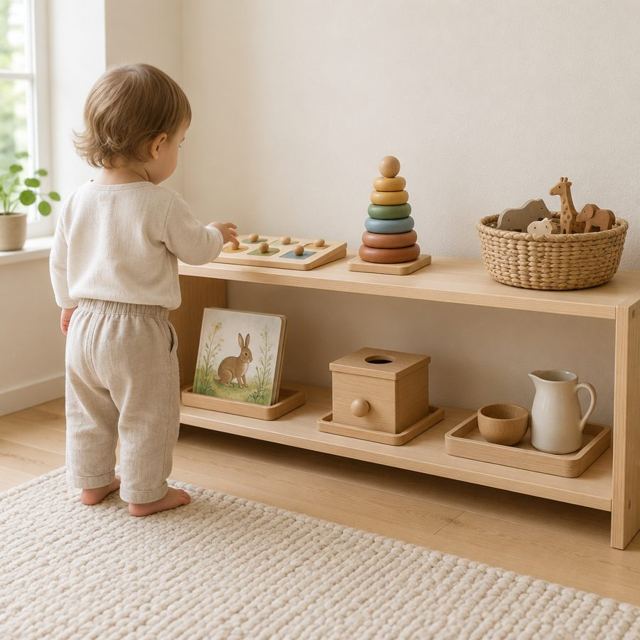
Choice and order
Display 4 to 8 activities. Model returning each one after use.
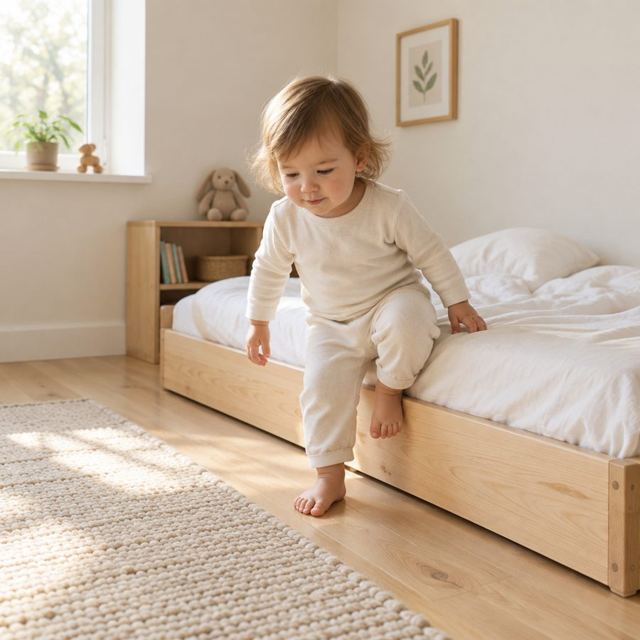
Independence at sleep and waking
A mattress on the floor in a fully safe room.
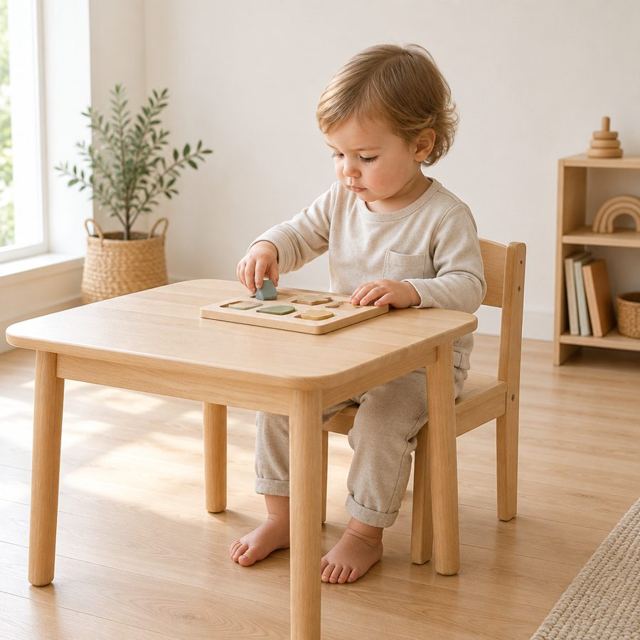
Focus and eating at their height
Feet should rest flat on the floor.
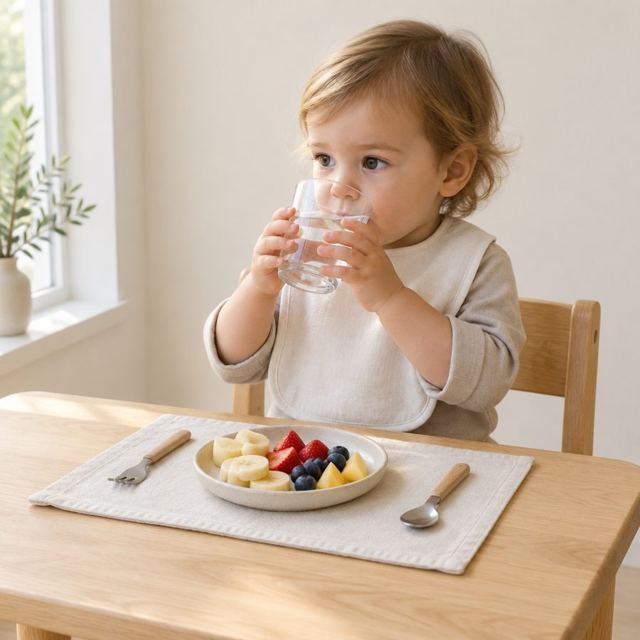
Self-feeding
Pour just a little water in a real small glass. Spills are part of learning.
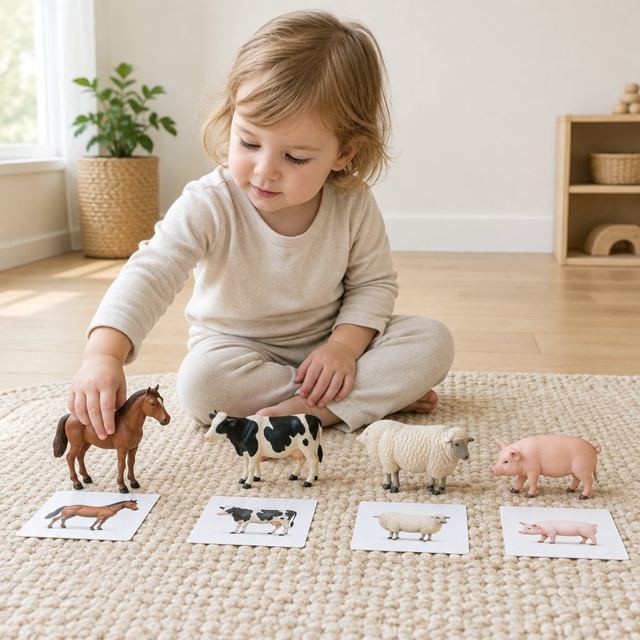
Vocabulary
Name each one clearly: "This is a horse." Then ask, "Can you show me the horse?"
Two-year-olds want to do it themselves. Practical life work like pouring, sweeping and dressing builds focus, coordination and confidence.
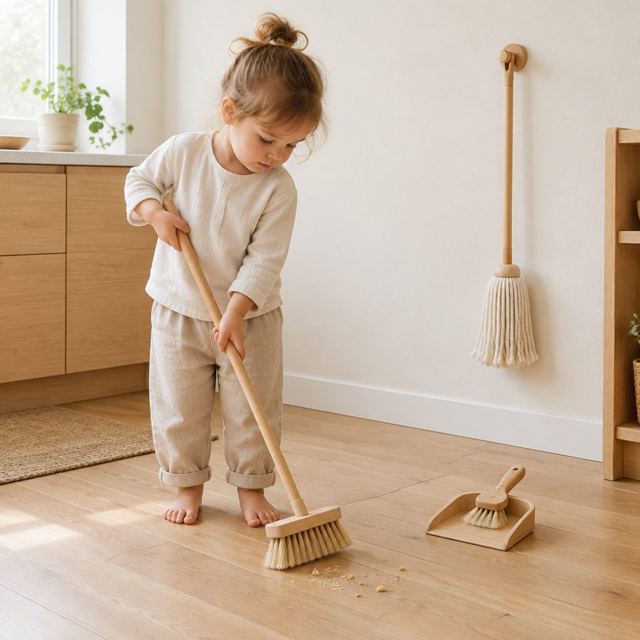
Caring for the home
Keep them on a low hook. Invite your child to help after meals.
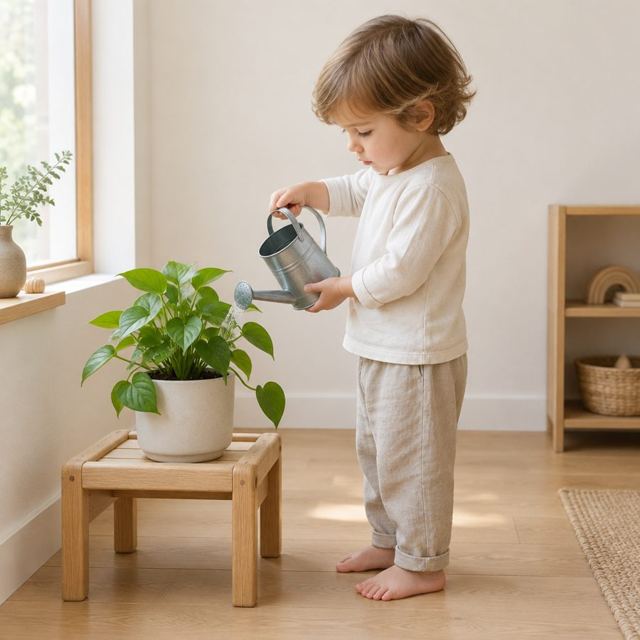
Caring for plants
Give your child one plant that is theirs to water.
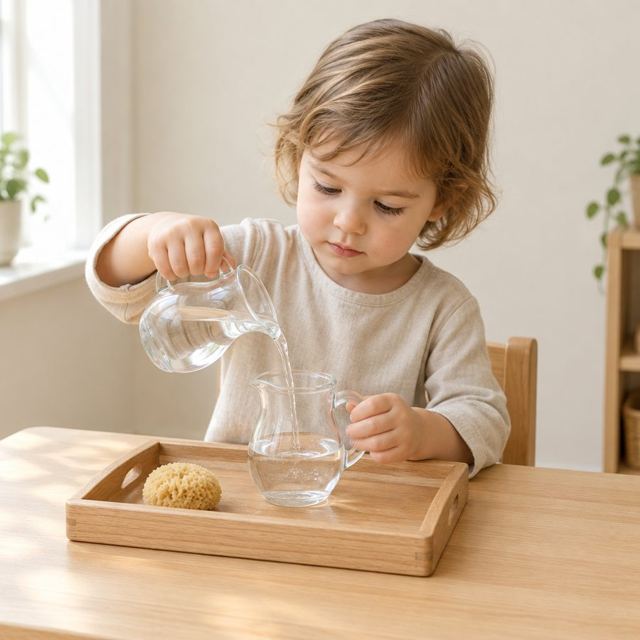
Control of movement
Start with dry beans, then move to water. Add a small sponge for spills.
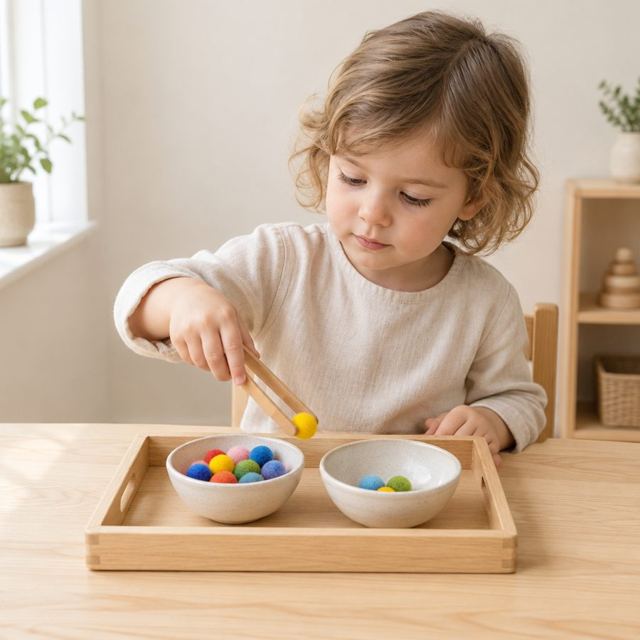
Pincer grip, preparing to write
Two bowls, one spoon or tongs, and pom-poms or beans. Always supervise.
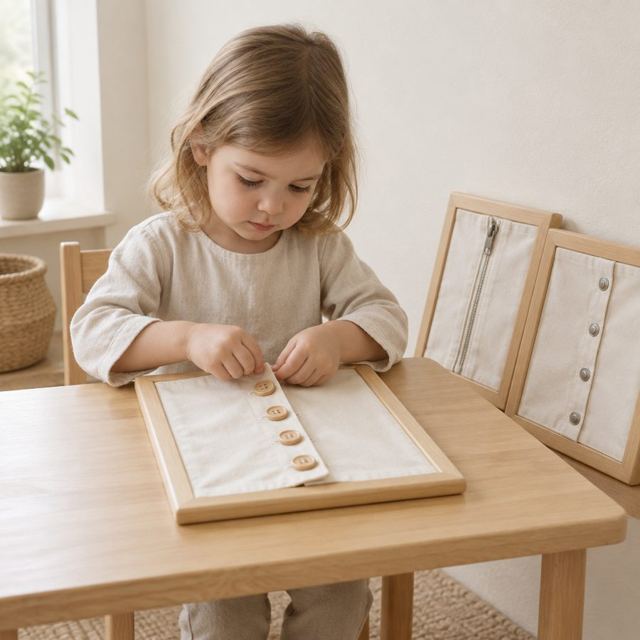
Getting dressed alone
Start with Velcro and large buttons. Zippers come later.
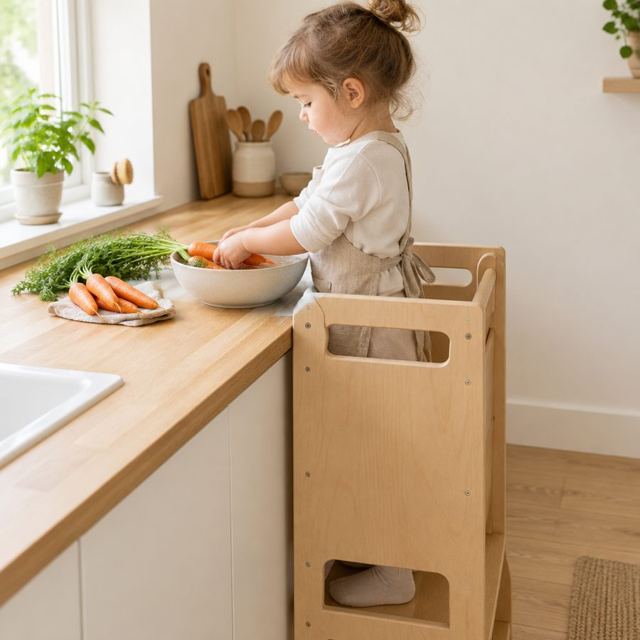
Helping in the kitchen
Washing vegetables, tearing lettuce, spreading butter.
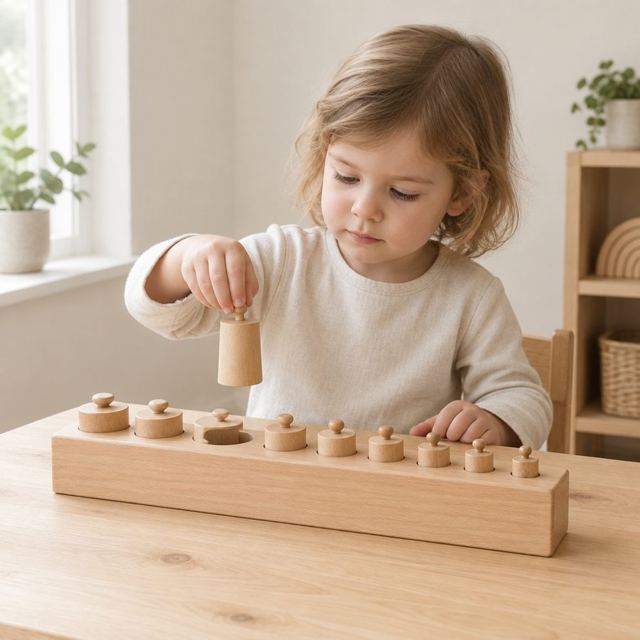
Size, careful grip
Remove all cylinders, mix them, and match each to its hole.
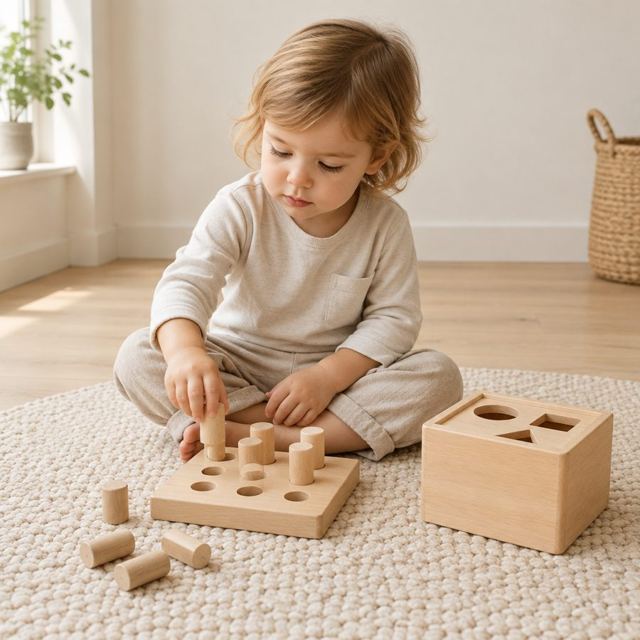
Shapes and finger strength
Choose simple ones with a clear goal.
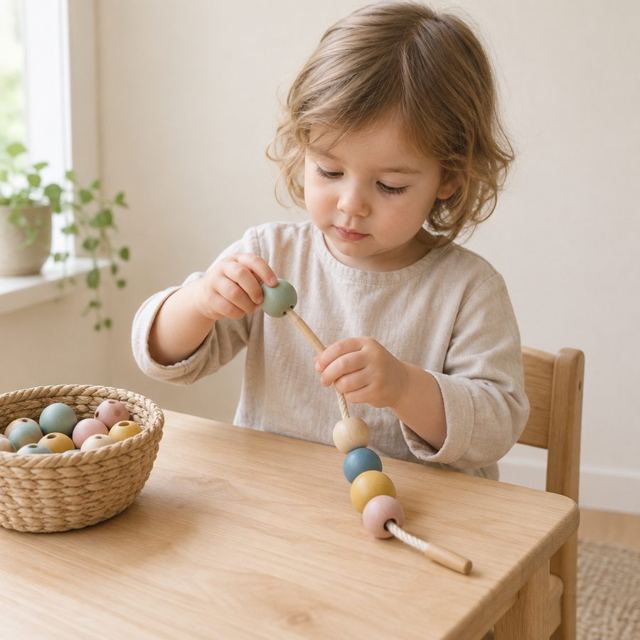
Two-hand coordination
Large wooden beads on a cord with a stiff tip. Always supervise.
Use large beads only, and stay close for children under 3.
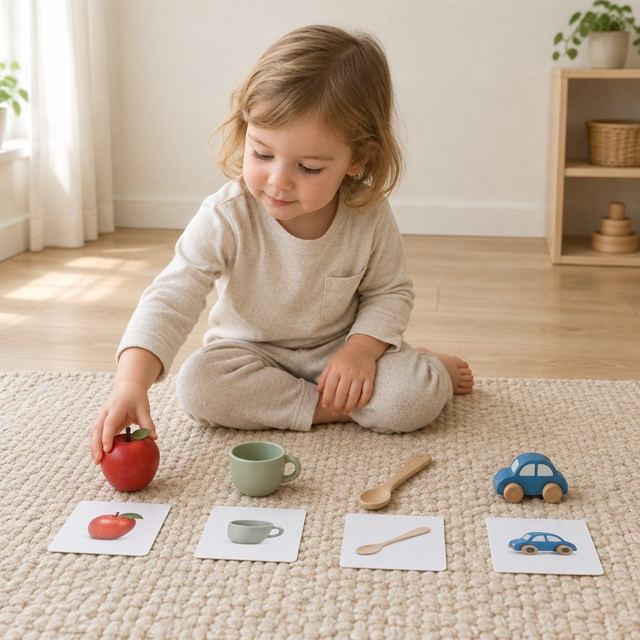
Language, visual matching
Object to picture first, then picture to picture.
From age three, children are ready for the classic Montessori materials: sensorial work, letters by sound, numbers you can hold, and the wide world.
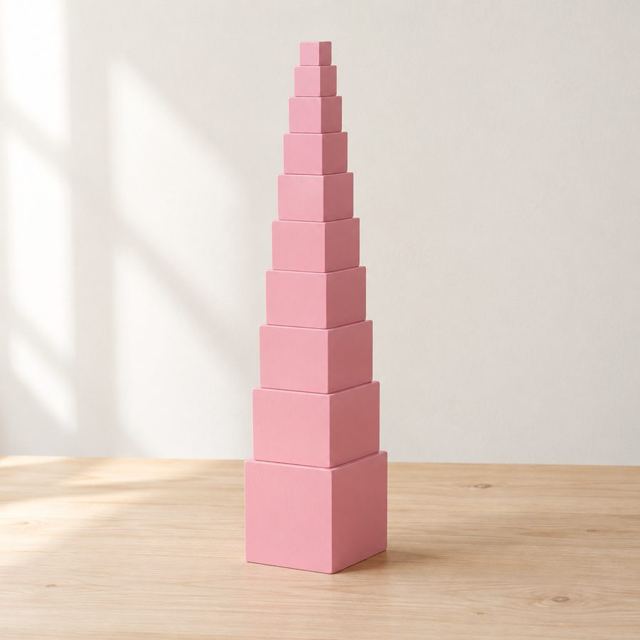
Size in three dimensions
Build from largest to smallest. Try carrying one cube at a time.
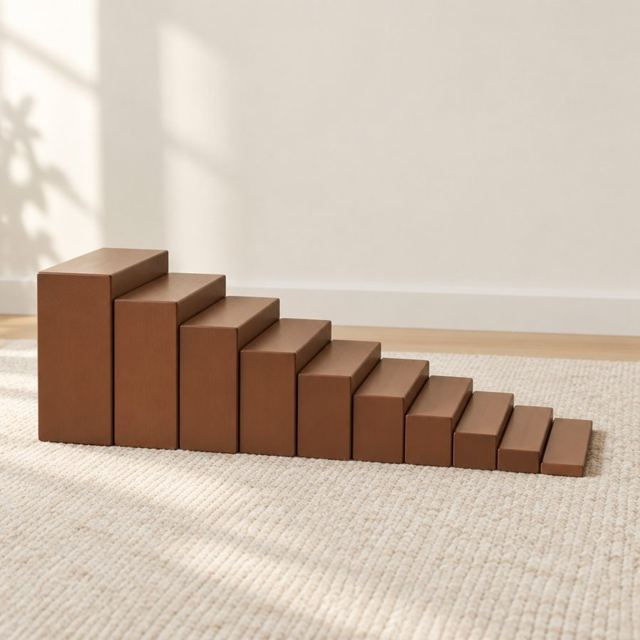
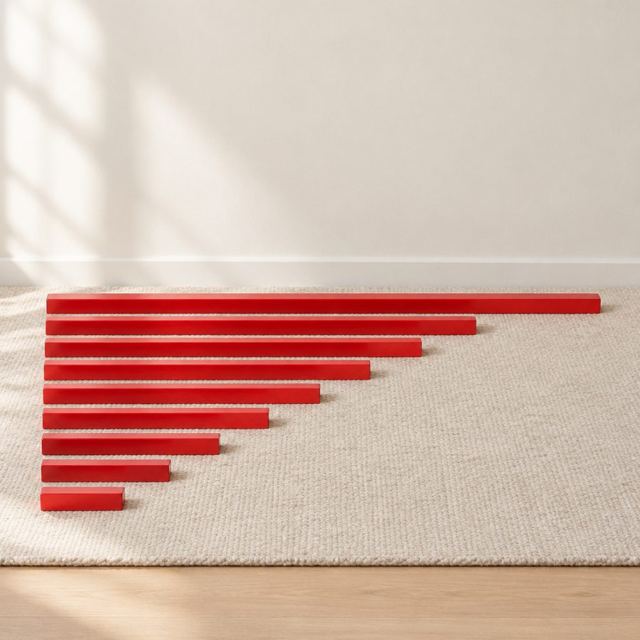
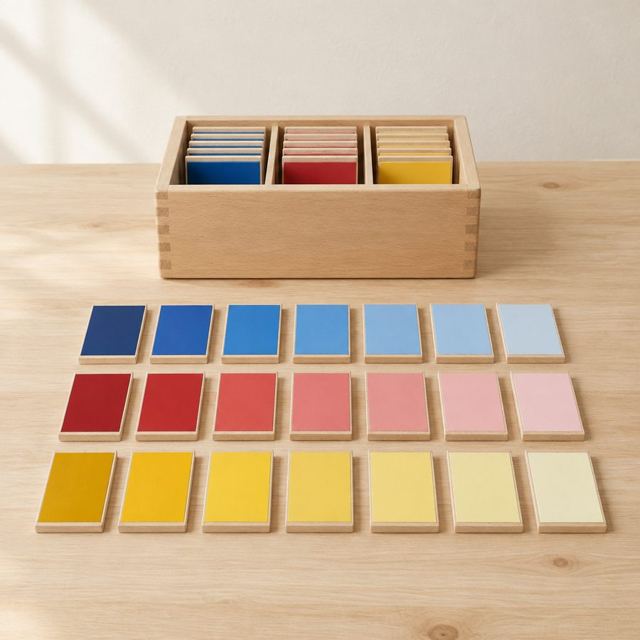
Matching and grading colors
Start with matching pairs, then grade shades from dark to light.
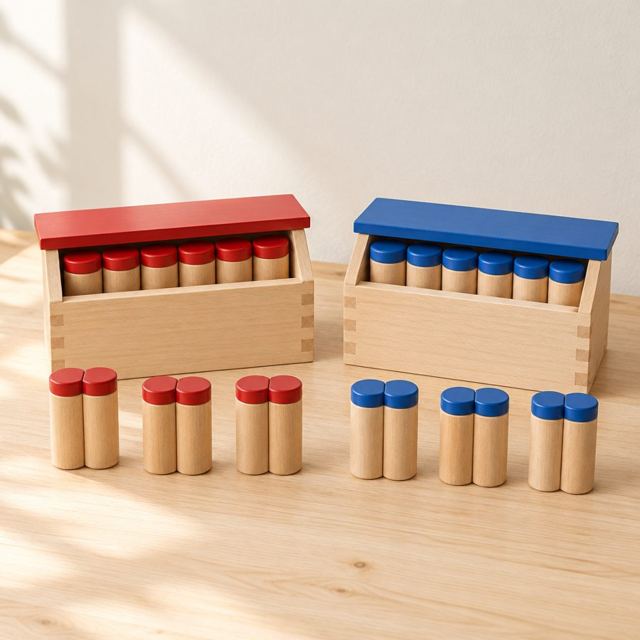
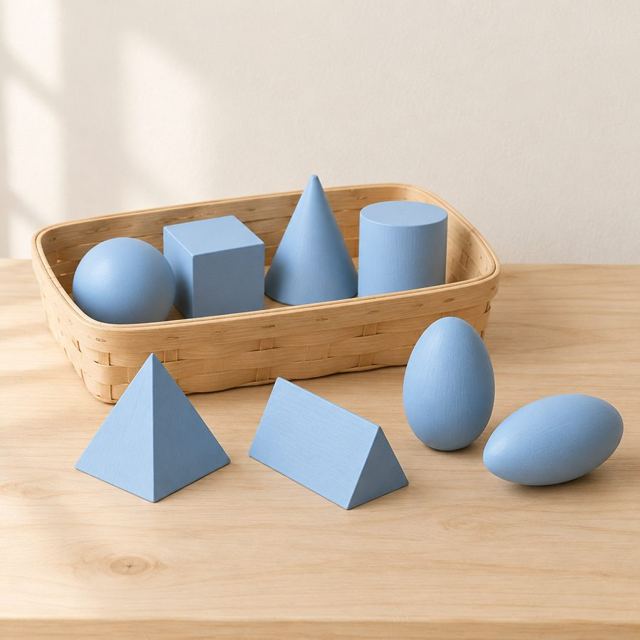
Naming 3D shapes
Feel each shape with eyes closed, then name it.
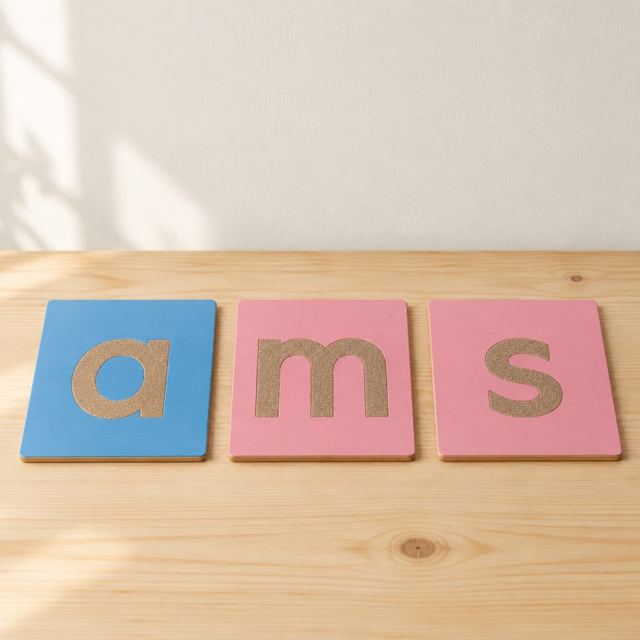
Letter sounds through touch
Trace the letter with two fingers while saying its sound: "mmm," not "em."
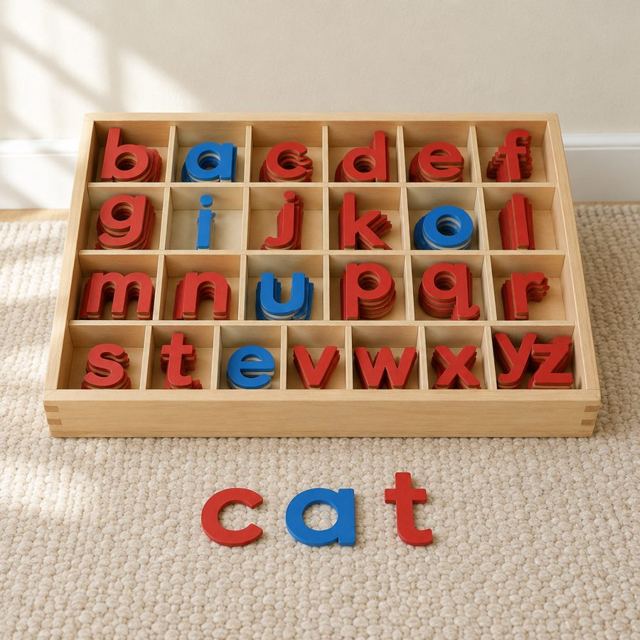
Building words before handwriting
Sound out simple words like "cat" and build them with letters.
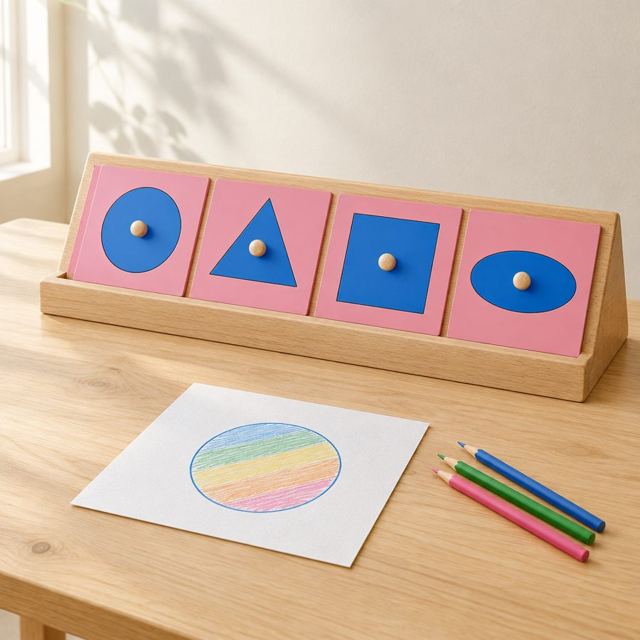
Pencil control
Trace the frame and the shape, then fill in with lines.
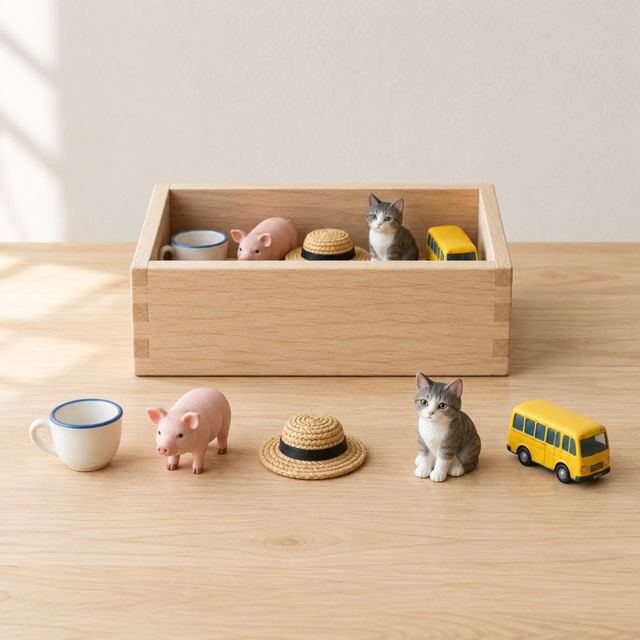
Matching sounds and early reading
Small objects with simple names, like cup, pig, and hat.
Small objects: for ages 3 and up, with an adult nearby.
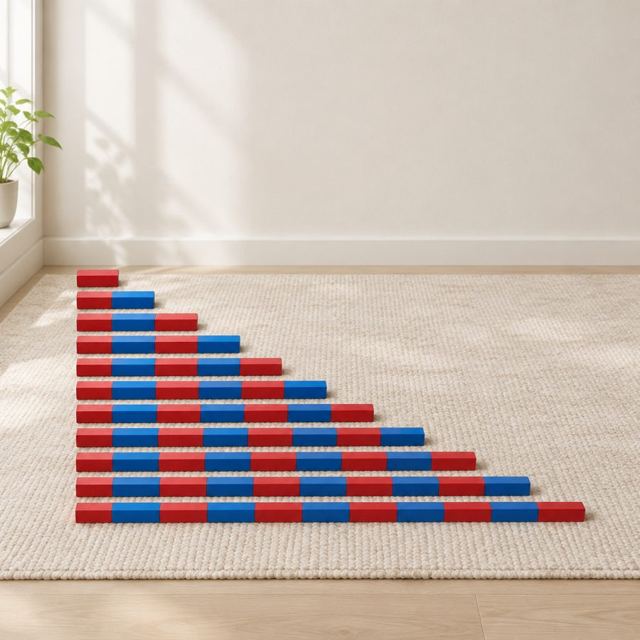
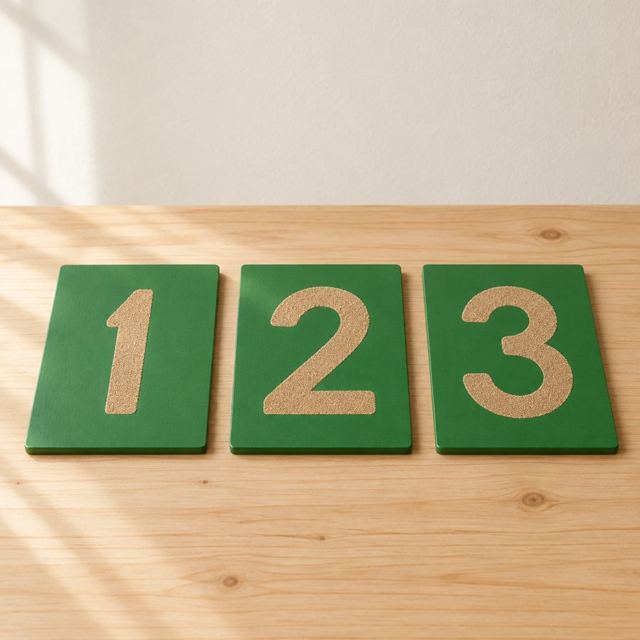
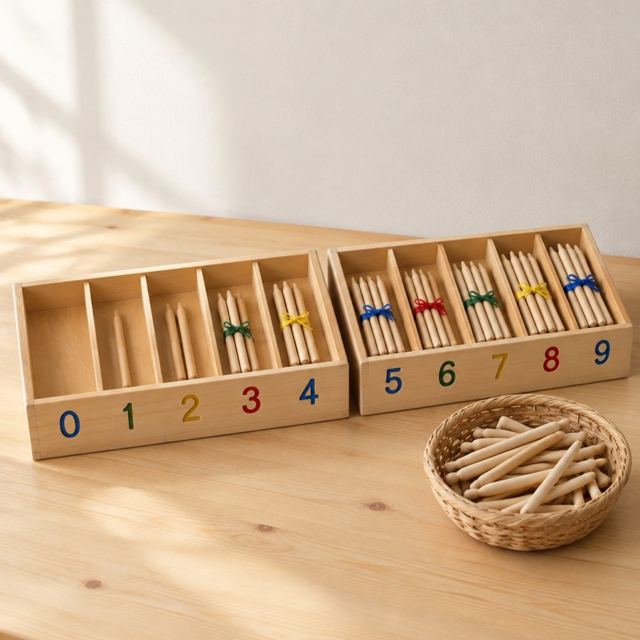
Counting and the idea of zero
Count the right number of spindles into each compartment.
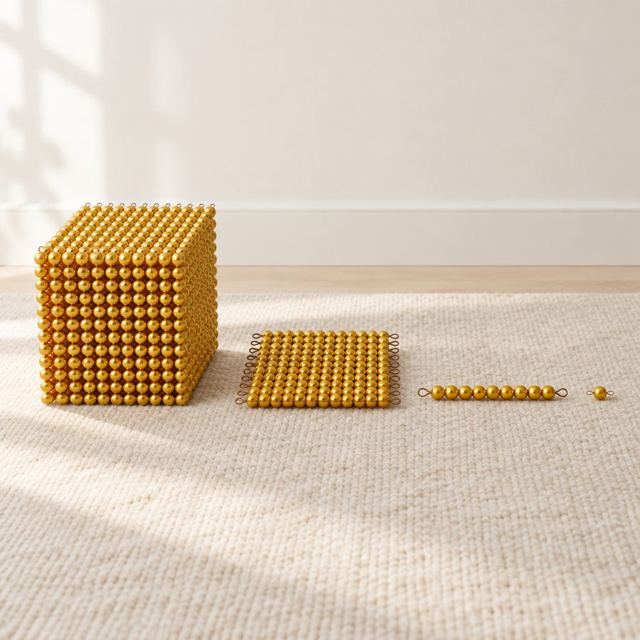
Place value: ones, tens, hundreds, thousands
Show one bead, a bar of ten, a square of a hundred, a cube of a thousand.
Small beads: for ages 3 and up, with an adult nearby.
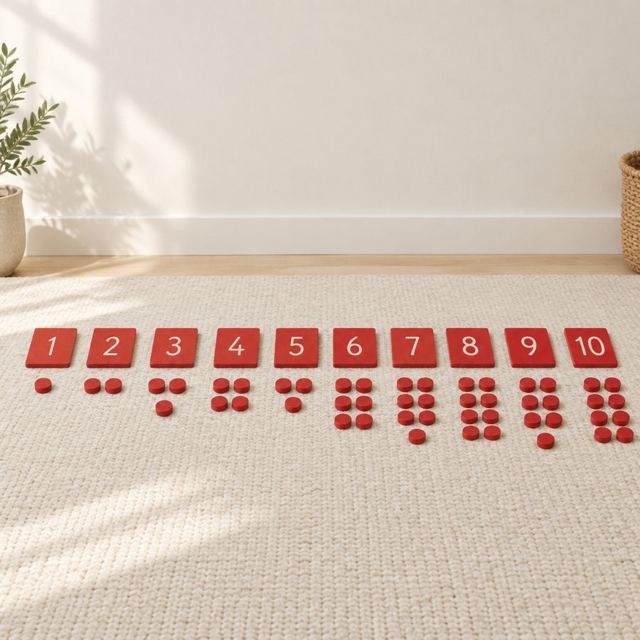
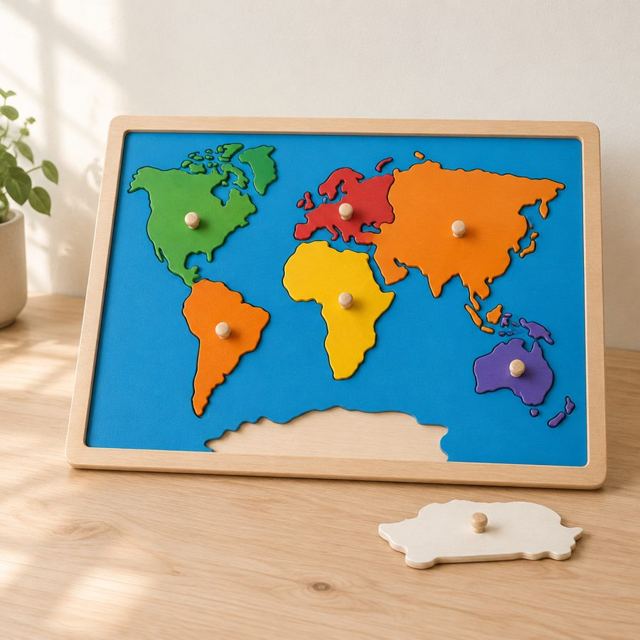
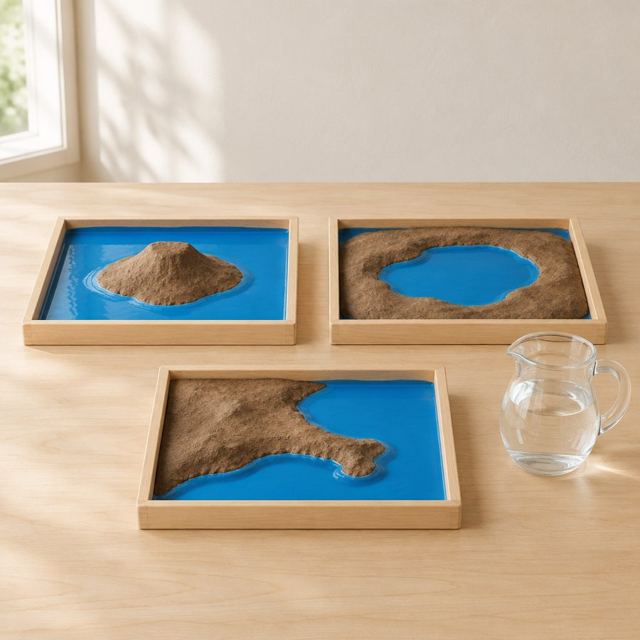
Island, lake, peninsula, and more
Pour water into each tray and name the form.
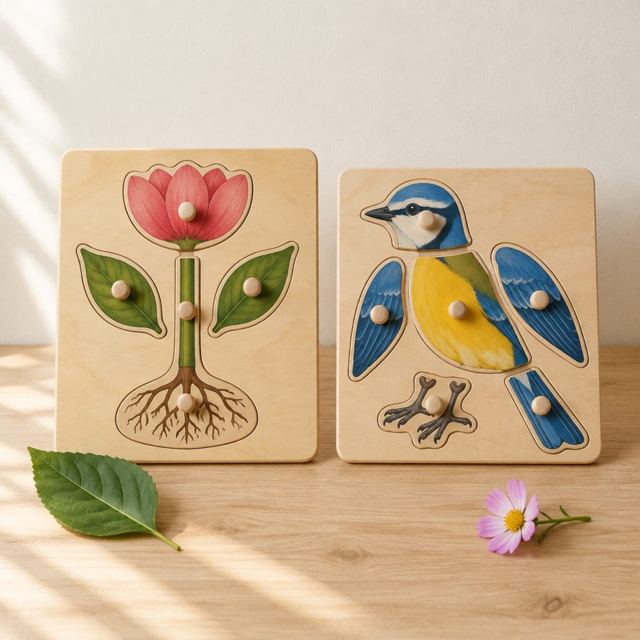
Parts of plants and animals
Match each puzzle piece to a real leaf or flower outside.
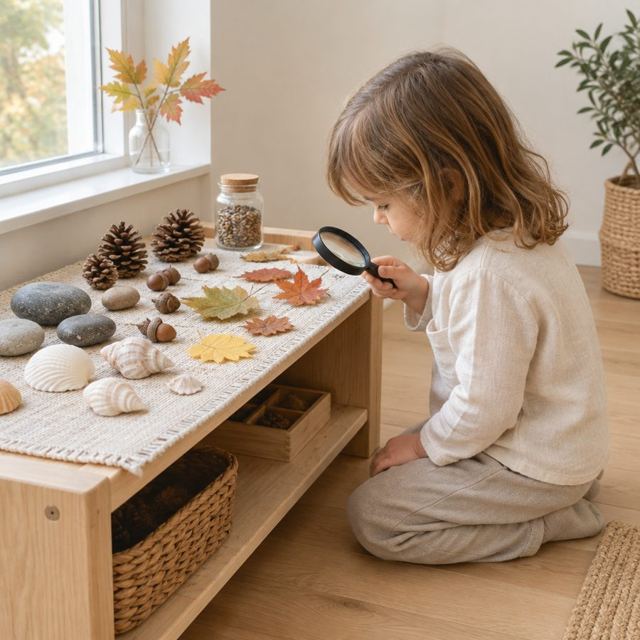
Seasons and observation
Add leaves, rocks, shells, and seeds you find together.